Seminar on the Political Ecology of Water – Rés-EAUx
Organised by Émilie Crémin (University of Lausanne), Johan Krieg (LESC, UMR 7186), and Muhammad Imran Azam (Independent Researcher, Paris).
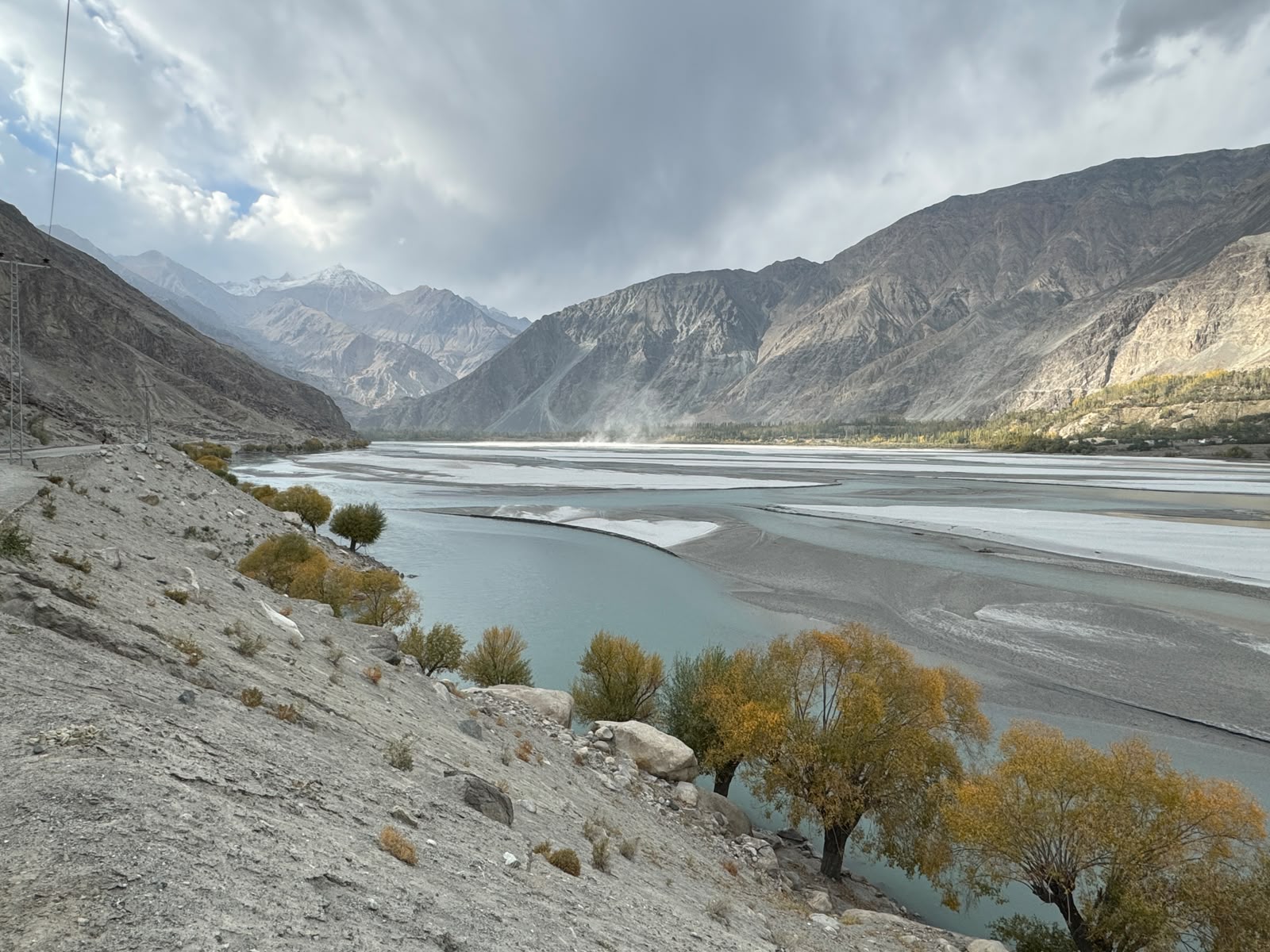
In South Asia, water is far more than a resource to be managed: it is also a living environment, an object of knowledge, a site of power relations, and, at times, a sacred entity. From the Himalayan highlands to the great river deltas, hydraulic infrastructures, river restoration policies, and socio-environmental mobilisations reveal the coexistence of competing understandings of water, its uses, and its governance.
How do different ways of knowing, defining, and governing water contribute to the production of power relations and the transformation of hydrosocial territories?
Adopting a multidisciplinary approach, this seminar explores three closely interconnected dimensions: the production and legitimisation of knowledge about water, including its circulation and contestation; infrastructures and governance arrangements, examined through their colonial and postcolonial legacies, scalar conflicts, and local reinterpretations; and the plurality of understandings of and relationships with water, raising questions of belonging, sovereignty, environmental justice, alternative ontologies, and the agency of aquatic environments.
Drawing on research conducted across India, Nepal, Bangladesh, Pakistan, and Sri Lanka, particular attention will be paid to transboundary water relations, interactions between scientific, administrative, legal, and vernacular knowledge systems, and the forms of resistance and experimentation that accompany socio-environmental transformations.
Beyond examining conflicts and modes of governance, the seminar also seeks to critically interrogate the categories through which these transformations are conceptualised: who defines what needs to be transformed, on the basis of which forms of knowledge, according to which understandings of justice, and for whose benefit? By fostering dialogue across disciplines and fieldwork contexts, the seminar aims to question the epistemological and political assumptions underpinning research on water.
The seminar will be held monthly, online via videoconference, with English as its working language.
If you’d like to present your research (online), please send a 300-word abstract with your details to: reseaup10@gmail.com