Water Resources and Climate Resilience
Maurepas (78310), France · +33 768 783 702 · m.imranazam@hotmail.com ·
linkedin.com/in/muhammad-imran-azam-phd-20a97032
RESEARCH & PROFESSIONAL PROFILE
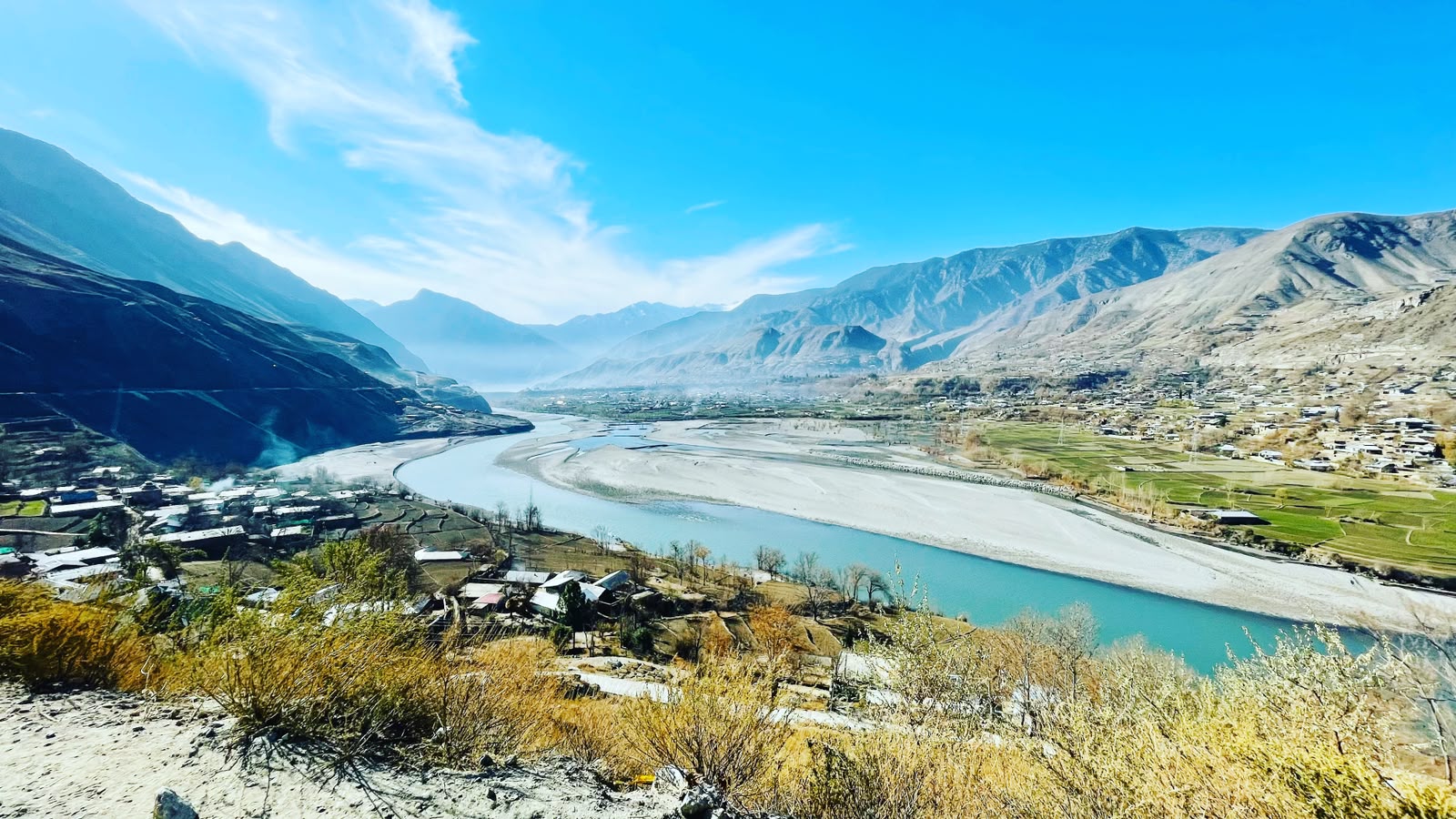
Water resources and climate resilience professional with 15 years of hydrological and hydrodynamic modelling, climate-risk assessment and multi-stakeholder water governance. Work focused on transboundary basins (Indus, Jhelum, Ravi, Chenab), flood and extreme-event analysis, Nature-Based Solutions and urban hydraulics, turning modelling results into planning and policy advice. Based in Maurepas, building my place in the French water-management landscape (urban hydraulics, regulatory compliance, MOE-aligned delivery) and developing working French.
KEY EXPERIENCE
Manager, then Senior Manager, Water Resources — WWF-Pakistan, Lahore Aug 2022 – Apr 2026
• Led a multi-donor IWRM and climate-adaptation portfolio in the Indus Basin (WWF-US, EU, FCDO, corporate funders), including the FCDO-funded Water Resources Accountability programme in the Upper Indus Basin (2021–2028) and urban water programmes in Lahore, Gujranwala and Faisalabad.
• Prepared CMIP6/SSP hydrological projections and flood-risk assessments; directed post-event field assessments for inundation mapping; designed NbS, rainwater-harvesting and urban flood interventions aligned with SDG 6 and the Sendai Framework.
• Trained provincial water departments in flood/drought modelling and early warning; contributed to the Recharge Pakistan GCF proposal (USD 77.5M); led corporate proposals to secure USD 4.5M. Deputy Team Lead / Senior Engineer (Climate Change & Water) — Zeeruk International, Islamabad Jul 2020 – Aug 2022
• Led hydraulic design and climate-adaptation planning for storm drainage, flood mitigation and groundwater recharge projects funded by the World Bank, ADB, EDCF Korea and the Government of Pakistan.
• Applied HEC-HMS, HEC-RAS, SWMM and SRM to flash floods, hill torrents, Chenab River flood modelling and water availability under CMIP5 RCP 4.5/8.5; coordinated with AQUALOGUS (Lisbon) on Punjab irrigation plans to EU standards. Manager (Hydrology) — Ravi Urban Development Authority, Lahore Sep 2021 – Apr 2022
• Analysed rainfall-runoff and flash floods in the transboundary Ravi basin (Pakistan and India) with numerical and physical modelling; developed blue-green and NbS concepts for urban catchments aligned with European resilience frameworks. Research Fellow — China Three Gorges University, Yichang Sep 2017 – Sep 2020
• Studied climate-change effects on extreme events in Wuhan and Yichang and heavy-metal contamination in Zhengzhou storm drains; built and validated hydrological and climatic datasets for basin-scale modelling.
Earlier: Lahore Waste Management Company (2014–2016); Barqaab Consulting Services, Gomal Zam Dam project (2013–2014);
lecturer in hydrology and irrigation engineering (2013–2017).
ACADEMIC ACTIVITIES
Co-supervised 10 Master’s theses (2020–2026) on flood hazard, drought and climate impacts in the Upper Indus Basin, at NUST, UET Lahore, the University of the Punjab and GC University Lahore.
Reviewer for Science of the Total Environment, Journal of Hydrology and Journal of Water Management (21 papers reviewed). Visiting Faculty, CEWRE, UET Lahore (Jan 2025 – Feb 2026);
Board of Study, CEWRE (2025–present); Program Advisory Council, IGIS, NUST (2021–present); Industrial Advisory Board, Civil Engineering, GIKI (Apr 2025 – Feb 2026).
EDUCATION & CORE COMPETENCIES
• PhD, Hydraulic Engineering, China Three Gorges University (2017–2020). Thesis: climate change and human-activity impacts on the hydrological regimes of the transboundary Jhelum River Basin.
• MS, Engineering Hydrology, CEWRE, UET Lahore (2010–2013). BSc, Agricultural Engineering, University of Agriculture, Faisalabad (2005–2009).
• Modelling and GIS: HEC-HMS, HEC-RAS, SWMM, ArcSWAT, SRM, SDSM-DC, R, GIS, remote sensing.
• Governance and policy: IWRM, River Basin Management Plans, climate adaptation plans, NbS and ecosystem-based adaptation, results-based M&E, donor and stakeholder engagement.
• Languages: Urdu (mother tongue); English (C2; writing B2); French (professional working proficiency, in progress).
PUBLICATIONS (22)
1. 2. 3. Azam, M.I., Guo, J., Shi, X., Yaseen, M., Tayyab, M., Hussain, Z., Dai, L., Bashir, H. & Tam, N.T.M. (2020). Spatial climatic variability and
impact of El Niño–Southern Oscillation on extreme precipitation of river catchment. 37(5), 346-364. Mary Ann Liebert, Inc.
Azam, M.I., Guo, J., Shi, X., Yaseen, M., Mohammad, A., Lu, H., Tayyab, M., Hussain, Z. & Dai, L. (2020). Evaluation of statistical model for future precipitation and temperature in drainage area of Jhelum River, Pakistan. 57(3). Pakistan Association for the Advancement of Agricultural Sciences.
Azam, M.I., Bhatti, M.T., Shi, X., Guo, J., Afzal, M. & Yaseen, M. (2018). Flood occurrence exploration for ungauged river catchment at
Jhelum River Basin of Pakistan. International Journal of Hydrology, 2(4), 520-526.4. 5. 6. 7. 8. 9. 10. 11. 12. 13. 14. 15. 16. 17. 18. 19. 20. 21. 22. Faisal, M., You, Z.J., Buttar, N.A., Naeem, M., Azam, M.I., Ali, B., Hashem, A., Almutairi, K.F. & Abd_Allah, E.F. (2024). Enhancing source identification of water-soluble heavy metal contamination in urban road sediments: a receptor model approach for water and sediment quality in a Chinese metropolitan area. Environmental Research Communications. IOP Publishing.
Hussain, Z., Wang, Z., Yang, H., Aziz, R., Azam, M.I., Usman, M., Arfan, M., Faisal, M. & Gao, M. (2024). CORDEX ensemble-based drought projections for Sindh Province of Pakistan under climate change. Journal of Water and Climate Change, 2024354. IWA Publishing.
Sibtain, M., Li, X., Li, F., Shi, Q., Bashir, H., Azam, M.I., Yaseen, M. & Saleem, S. (2024). Improving multivariate runoff prediction through multistage novel hybrid models. Water Resources Management, 1-20. Springer Nature.
Hussain, Z., Wang, Z., Yang, H., Arfan, M., Wang, W., Faisal, M., Azam, M.I. & Usman, M. (2024). Evolution and trends of water scarcity indicators: unveiling gaps, challenges, and collaborative opportunities. Water Conservation Science and Engineering, 9(1), 8. Springer Nature.
Bashir, H., Sibtain, M., Hanay, Ö., Azam, M.I. & Saleem, S. (2023). Decomposition and Harris Hawks optimized multivariate wind speed forecasting utilizing Sequence2Sequence-based spatiotemporal attention. Energy, 127933. Elsevier.
Tayyab, M., Xiaohua, D., Sibtain, M., Ahmad, I., Zahra, A. & Azam, M.I. (2023). Monthly streamflow forecasting using decomposition-based hybridization with two-step verification method over the Mangla Watershed, Pakistan. Iranian Journal of Science and Technology, Transactions of Civil Engineering, 47(1), 565-584. Springer Nature.
Hussain, Z., Wang, Z., Wang, J., Yang, H., Arfan, M., Hassan, D., Wang, W., Azam, M.I. & Faisal, M. (2022). A comparative appraisal of classical and holistic water scarcity indicators. Water Resources Management, 1-20. Springer Nature.
Sibtain, M., Bashir, H., Nawaz, M., Hameed, S., Azam, M.I., Li, X., Abbas, T. & Saleem, S. (2022). A multivariate ultra-short-term wind speed forecasting model by employing multistage signal decomposition approaches and a deep learning network. Energy Conversion and Management, 263, 115703.
Sibtain, M., Li, X., Azam, M.I. & Bashir, H. (2021). A hybrid model for runoff prediction using variational mode decomposition and artificial
neural network. Water Resources, 48(5), 701-712.
Faisal, M., Wu, Z., Wang, H., Hussain, Z. & Azam, M.I. (2021). Human health risk assessment of heavy metals in the urban road dust of
Zhengzhou metropolis, China. Atmosphere, 12(9), 1213. MDPI.
Sibtain, M., Li, X., Bashir, H. & Azam, M.I. (2021). Hydropower exploitation for Pakistan’s sustainable development: a SWOT analysis
considering current situation, challenges, and prospects. Energy Strategy Reviews, 38, 100728.
Sibtain, M., Li, X., Nabi, G., Azam, M.I. & Bashir, H. (2020). Development of a three-stage hybrid model by utilizing a two-stage signal
decomposition methodology and machine learning approach to predict monthly runoff at Swat River Basin, Pakistan. Discrete Dynamics in
Nature and Society. Wiley.
Yaseen, M., Ahmad, I., Guo, J., Azam, M.I. & Latif, Y. (2020). Spatiotemporal variability in the hydro-meteorological time-series over Upper
Indus River Basin of Pakistan. Advances in Meteorology, 5852760. Wiley.
Yaseen, M., Waseem, M., Latif, Y., Azam, M.I., Ahmad, I., Abbas, S., Sarwar, M.K. & Nabi, G. (2020). Statistical downscaling and
hydrological modelling-based runoff simulation in trans-boundary Mangla Watershed, Pakistan. Water, 12(11), 3254. MDPI.
Oad, V.K., Dong, X., Arfan, M., Kumar, V., Mohsin, M.S., Saad, S., Lü, H., Azam, M.I. & Tayyab, M. (2020). Identification of shift in sowing
and harvesting dates of rice crop (Oryza sativa L.) through remote sensing techniques: a case study of Larkana District. Sustainability,
12(9), 3586. MDPI.
Othman Ali, R., Chunju, Z., Yihon, Z. & Azam, M.I. (2018). The effects of human activities, climatic conditions and land-use factors on water
resources development in Huai River Basin, Northeast China. International Journal of Hydrology, 2(2), 107-114. Medcrave.
Abbas, T., Nabi, G., Boota, M.W., Azam, M.I., Jin, H. & Faisal, M. (2018). Uncertainty analysis of runoff and sedimentation in a forested
watershed using sequential uncertainty fitting method. Sciences in Cold and Arid Regions, 8(4), 297-310.
Yaseen, M., Naveed, M., Sarwar, M.K., Rehman, M.H. & Azam, M.I. (2017). Selection of best diversion facility for the construction of
Kohala Hydropower Dam. International Conference on Hydropower Development of Pakistan, CEWRE, UET Lahore, 127-133.
M., Ahmad, I., Nasir, B., Azam, M.I., Rehman, M.H. & Afzel, M. (2017). Evaluation of suitable design flood frequency approaches for
hydropower structures on the mountainous rivers (a case study of Upper Indus Basin). International Conference on Hydro-power
Development of Pakistan, CEWRE, UET Lahore.